
Programs - Curated for Curious Audiences
Program #2: WHAT IS CHAMBER MUSIC?
Historically, the phrase chamber music conjures images of 18th-century European drawing rooms, powdered wigs, and quiet string quartets playing for royalty.
But at its core, chamber music was never defined by a specific genre or period. It was defined by an atmosphere: intimate, unconducted music where every voice is essential, and the performative spark lies entirely in real-time conversation between musicians.
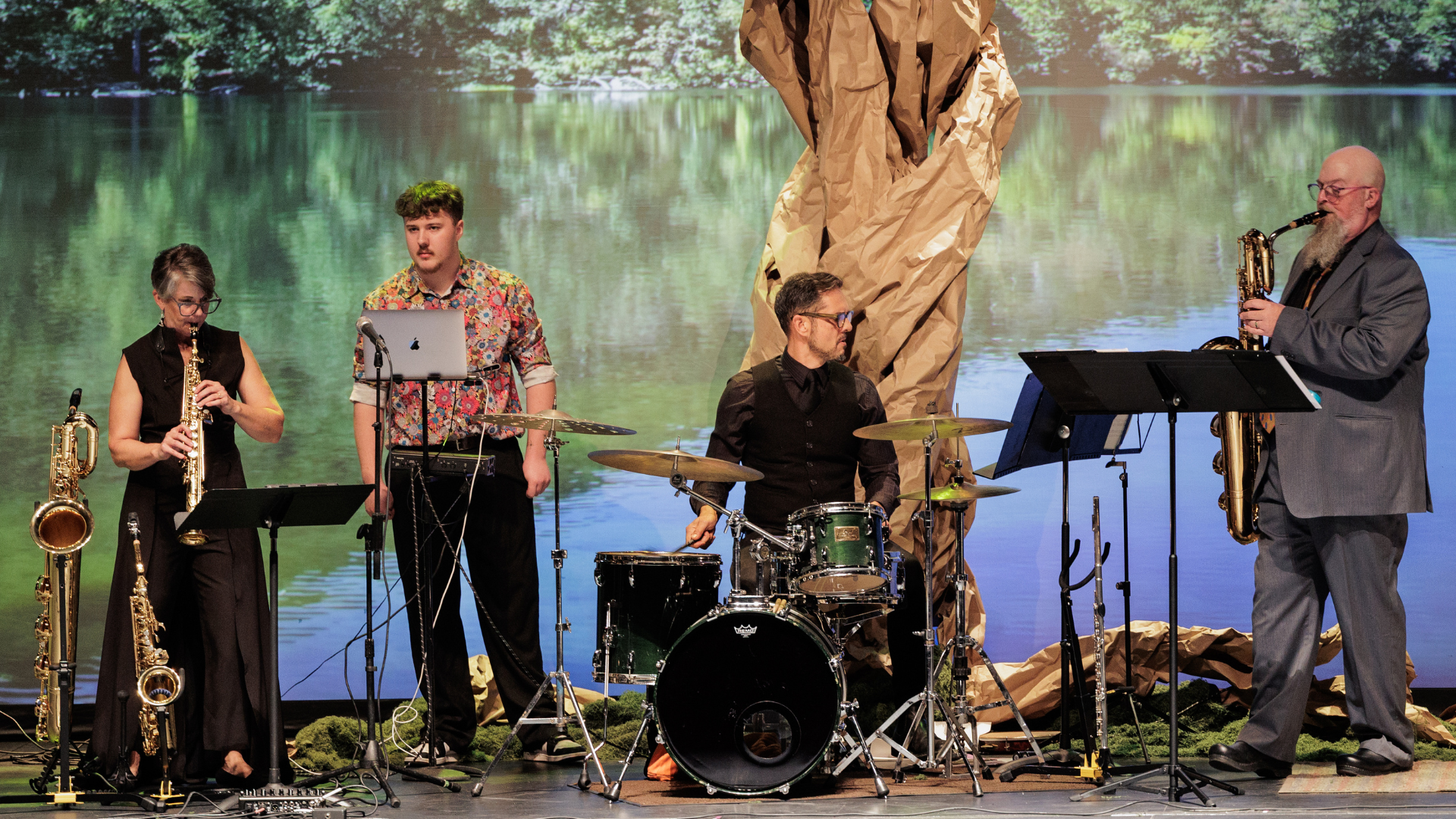
Today, chamber music is a living, genre-defying dynamic. It is a space where acoustic traditions blend with modern grooves, contemporary commissioning, global folk rhythms, and pop culture classics. This afternoon’s program explores that continuous dialogue—asking not just what chamber music was, but what it can be.
The Power of the Present Voice
We open with the kinetic energy of Olivia Kieffer’s Hot Work, a piece that immediately establishes the tactile, high-energy environment of modern chamber composition. Kieffer’s driving textures set the stage for GianCarlo Lay’s Interwoven—a brand-new consortiumcommission that highlights one of chamber music’s vital functions today: creating a platform for living composers to craft new artistic lineages in real time. Alongside these sits Dan Cooper’s Follies, showcasing how contemporary chamber works lean into playfulness, rhythmic surprise, and theatrical flair.
Storytelling and Legacy
Chamber music offers an uniquely intimate lens for musical portraits.
In Brad Hubbard’s Katherine Johnson, the ensemble turns its focus to tribute and storytelling, honoring the pioneering NASA mathematician whose calculated trajectories made history. Within the close-knit frame of a small ensemble, every subtle shift in tone and harmony takes on heightened emotional clarity, turning biography into music.
Movement, Dance, and Global Traditions
Without a conductor at the podium, chamber ensemble players rely entirely on shared breath, eye contact, and collective pulse. That shared sense of groove shines in José Elizondo’s Danzas Latinoamericanas. Rich in melodic warmth and driving Latin rhythms, Elizondo’s work demonstrates how chamber music naturally absorbs and celebrates folk dance traditions from around the globe.
Reimagining the Familiar
A great chamber arrangement strips a famous song down to its essential DNA, reconstructing it with fresh colors and intricate textures. Today’s program showcases this vernacular spirit through arrangements by Hicks-Wozniak:
Beatles Medley (Harrison/Lennon/McCartney): Bringing a chamber music lens to some of rock music’s most famous melodies, revealing the rich counterpoint woven into their songwriting.
Jolene (Dolly Parton): Reimagining the driving urgency and dramatic tension of Parton’s classic through acoustic chamber layering.
So, what is chamber music? It is not a museum piece. It is a way of listening and performing—a shared conversation between artists on stage, and an invitation for you, the audience, to pull up a chair and listen in.